A hailstorm can move through St. Charles County fast. One minute, the sky looks dark, and the next, you hear hail hit the roof, siding, gutters, windows, and everything else outside.
After the storm passes, most homeowners have the same question: What should I do now?
The first steps are simple, but the order matters. Stay safe, document visible damage, check for leaks, avoid climbing on the roof, and schedule a professional inspection before making permanent repairs. Hail damage is not always visible from the ground, and a roof can be damaged even if it is not leaking yet.
Freedom Restoration and Roofing helps homeowners throughout the Greater St. Louis and Warrenton areas with storm-damage inspections, roof repair, siding, gutters, windows, and insurance-related restoration. If you are unsure what the storm did to your home, Freedom Roofing can help with a free inspection and straightforward recommendations.
In this guide, we will cover:
- What to do right after hail hits your home.
- What damage can you safely check from the ground.
- Why roof hail damage can be hard to see.
- When emergency tarping or repair may be needed.
- How inspections and insurance claims usually work.
- How to choose a local roofing contractor you can trust.
Why Hail Damage Is a Serious Concern in St. Charles County
Hail damage is not always obvious. Sometimes it looks like dented gutters, cracked siding, or granules collecting near a downspout. Other times, the real damage is on the roof surface where homeowners cannot safely see it.
For asphalt shingles, hail can bruise the shingle mat, knock away protective granules, loosen seal strips, or create small fractures. These problems may not cause a leak the same day. A roof can look fine after the storm, then leak weeks or months later during another heavy rain.
Homes in this part of Missouri also face severe weather, including high winds, heavy rain, falling branches, and tornadoes. A roof that is already aging or poorly installed may have a harder time handling that combination.
That is why a roof storm damage inspection is not about fear. It is about getting clear information before a small issue becomes a bigger repair.
What to Do Before Calling Insurance or Approving Repairs
Before you call the insurance company, approve repairs, or decide the roof is fine, take a few basic steps.
Write Down the Storm Date
Make a note of the date and approximate time the hailstorm came through. This helps if you speak with your insurance company later. It also helps your roofing contractor understand which roof slopes and exterior areas may have taken the strongest impact.
Avoid Permanent Repairs Until the Damage Is Documented
Temporary protection is different from permanent repair. If water is entering the home, emergency tarping or temporary leak control may be needed right away. That is different from replacing shingles or starting a full repair before the damage has been inspected.
Keep photos, notes, and receipts for any temporary work.
Understand Your Repair or Replacement Budget
Not every hail-damaged roof needs replacement. Some homes only need a custom repair bid for damaged shingles, flashing, ridge caps, pipe boots, or vents.
For Freedom Restoration and Roofing customers, typical roof repairs often range from about $600 to $2,400, depending on the issue. Full shingle roof replacements vary more widely, often from about $10,000 to $40,000, depending on roof size, roof complexity, material choice, and the condition of the existing system.
Financing may be available for larger projects, helping homeowners move forward without delaying needed work.
Ask About Permits and Code Requirements
Roofing work may require a local permit or code compliance, depending on the project’s scope and the home’s location. A reputable local contractor should know how to handle this and explain what applies to your project.
You should not have to guess your way through the process.
Steps to Take After Hail Damages Your Roof
1. Wait Until the Storm Has Passed
Do not go outside during active hail, lightning, or high winds. Even small hail can cause injury, and storm debris can make your yard, driveway, and walkways unsafe.
Once the storm has fully passed, you can begin checking your home from the ground.
2. Check for Immediate Safety Concerns
Before looking for roof damage, look for anything that could put your family or home at risk.
Check for:
- Downed power lines.
- Broken windows or skylights.
- Water dripping from ceilings.
- Wet spots in the attic.
- Sagging drywall or ceiling stains.
- Large branches on the roof.
- Loose gutters or hanging metal.
- Damaged siding near windows or corners.
If water is actively coming in, call for emergency help. Freedom Restoration and Roofing offers 24/7 emergency service when tarping or temporary repair is needed to help prevent further damage.
3. Document Visible Damage Before Cleaning Up
Take photos and videos before moving debris or starting cleanup. You do not need to climb a ladder to do this.
From the ground, document:
- Dented gutters and downspouts.
- Shingle granules near downspouts.
- Damaged siding.
- Cracked window screens or frames.
- Dented vents or metal accessories.
- Fallen branches.
- Interior ceiling stains.
- Attic moisture, if safely accessible.
Take both wide photos and close-up photos. Wide photos show the area of the home. Close-ups show the damage more clearly.
This documentation can help during the inspection and may also help if you contact your insurance company.
4. Do Not Climb Onto the Roof
After a hailstorm, shingles may be wet, slick, or covered in loose granules. Flashing, gutters, and roof edges may also be damaged. It is not worth the risk.
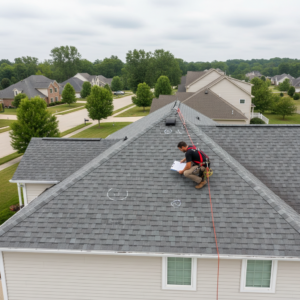
A professional roofer knows how to inspect the roof safely and what signs of hail damage to look for. Many of those signs are not visible from the ground.
5. Look for Ground-Level Signs of Roof Damage
You may not be able to see shingle bruising from the yard, but you can often spot clues that the storm was strong enough to damage the roof.
Possible signs include:
- Granules washing out of the gutters.
- Dents on downspouts.
- Dings on metal vents or flashing.
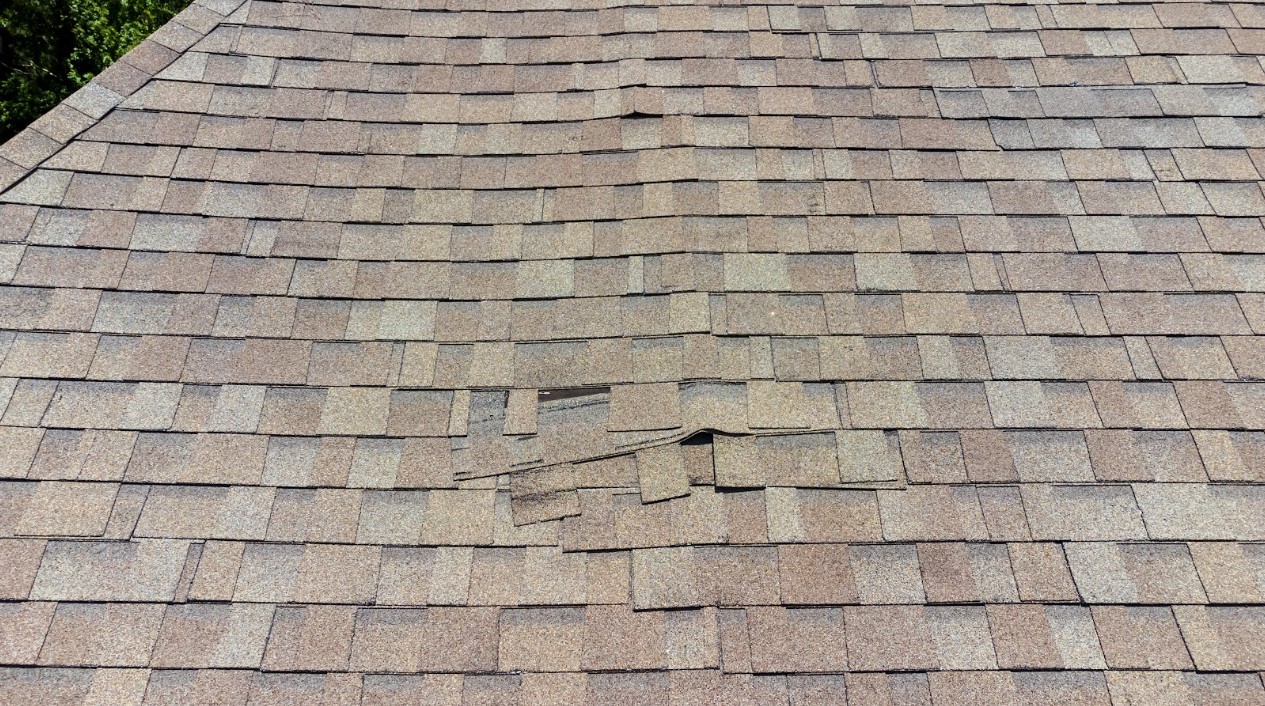
- Loose or missing shingles.
- Pieces of shingles in the yard.
- Damaged ridge caps.
- Water stains inside the home.
- New leaks around vents, fireplaces, or ceiling fixtures.
If you see any of these signs, schedule a roof inspection.
6. Schedule a Professional Storm Damage Inspection
A good inspection should give you answers, not pressure.
At Freedom Restoration and Roofing, we inspect the roofing system, explain what we see, and help you understand whether the damage is minor, repairable, or serious enough to consider replacement. We also look at related exterior areas such as gutters, siding, windows, flashing, and ventilation when relevant.
A storm damage inspection may include:
- Shingle condition.
- Hail impact marks.
- Granule loss.
- Ridge caps.
- Flashing around penetrations.
- Pipe boots and vents.
- Gutters and drainage.
- Signs of attic moisture.
- Interior leak indicators.
The goal is to help you make a confident decision based on the actual condition of your home.

7. Contact Your Insurance Company When It Makes Sense
Not every roof issue requires an insurance claim. A small repair may cost less than your deductible. A larger storm event may justify starting the claims process.
A contractor cannot decide coverage for you. Your insurance company makes that decision. What a qualified roofer can do is inspect the damage, document what is visible, and provide repair or replacement recommendations based on the condition of the roof.
When you contact insurance, have this information ready:
- Storm date and approximate time.
- Photos or videos of visible damage.
- Notes from your inspection.
- Receipts for emergency tarping or temporary repair.
- Any active leak information.
Freedom Restoration and Roofing has experience helping homeowners understand this process without making promises we cannot control.
Should You Repair or Replace a Hail-Damaged Roof?
Hail damage does not always mean you need a new roof. The right recommendation depends on the roof’s age, material, installation quality, ventilation, and amount of damage.
Roof Repair May Make Sense When
Repair may be the right choice when:
- Damage is limited to one area.
- The roof is still fairly new.
- Only a few shingles or vents are affected.
- Flashing damage is minor.
- There are no widespread hail impacts.
- The roof still has useful life left.
Freedom Restoration and Roofing provides custom repair bids because every repair is different. A vent leak is not the same as widespread hail bruising. A missing shingle is not the same as damaged decking.
Roof Replacement May Make Sense When
Replacement may be the better long-term decision when:
- Damage is widespread across multiple slopes.
- The roof is already near the end of its lifespan.
- Shingles are brittle, curling, or losing granules.
- There are repeated leaks.
- Storm damage is combined with age-related wear.
- The existing roof was poorly installed.
Many asphalt shingle roofs in Missouri last around 15 to 20 years depending on storm exposure, ventilation, materials, and workmanship. If a roof is already near that range, repairing storm damage may not provide the long-term value a homeowner needs.
Roofing Materials That Can Help With Future Storms
The best time to think about storm performance is before the next storm.
Freedom Restoration and Roofing installs materials that fit Missouri homes, weather patterns, and budgets. As an Owens Corning Platinum Contractor, we recommend products based on how they perform over time, not just how they look on installation day.
Owens Corning Duration Shingles
Owens Corning Duration shingles are a common choice for homeowners who want a strong architectural shingle with good wind performance and a clean appearance.
They are a practical fit for many homes because they offer:
- Strong everyday performance.
- Good curb appeal.
- Reliable manufacturer backing.
- A range of color options.
- Compatibility with full roofing system warranties.
Impact Resistant Shingles
For homeowners concerned about hail, impact resistant options may be worth discussing. These products are designed to better handle impact than standard shingles.
They may be a good fit if:
- Your home has frequent hail exposure.
- You plan to stay in the home long-term.
- You want stronger storm performance.
- Your insurance carrier offers potential benefits for qualifying materials.
They do cost more than standard shingles, so the decision should be based on your budget, risk level, and long-term plans.
Metal Roofing
Metal roofing can be a strong long-term option for some homes. Freedom installs standing seam and exposed fastener metal roofing systems from Central States.
Metal may be worth considering if you want:
- Long service life.
- Strong weather performance.
- Lower maintenance needs.
- Better shedding of rain and snow.
It also comes with a higher upfront cost and is not the right choice for every home. A clear inspection and honest conversation can help determine whether it makes sense.
Why a Local Roofing Contractor Matters After a Hailstorm
After a major storm, homeowners often get calls, door knocks, and flyers from contractors they have never heard of. Some may be legitimate. Others may be storm chasers who leave the area once the work slows down.
That matters because roofing problems do not always show up immediately. If a repair fails six months later, you want a contractor who is still nearby and accountable.
Look for a roofing company with:
- A real local service history.
- Strong reviews.
- Clear written estimates.
- Manufacturer credentials.
- Insurance claim experience.
- Straightforward communication.
- Workmanship warranty details.
- A process that does not rely on pressure.
Freedom Restoration and Roofing is veteran-owned, BBB A+ rated, and has served the Greater St. Louis and Warrenton areas for more than 10 years. We are an Owens Corning Platinum Contractor, and eligible full roof systems may qualify for a 50-year Owens Corning Platinum Warranty. Our standard workmanship warranty on installs is 5 years.
We believe homeowners should know what they are paying for and why it matters.